The holiday season is a special time filled with traditions, stories, and symbols that bring families and communities together. From the glow of candles to the sharing of food, holidays offer opportunities for connection, reflection, and joy. A Montessori-inspired approach to exploring holidays focuses on helping children understand and appreciate the many beautiful ways people around the world celebrate this time of year.
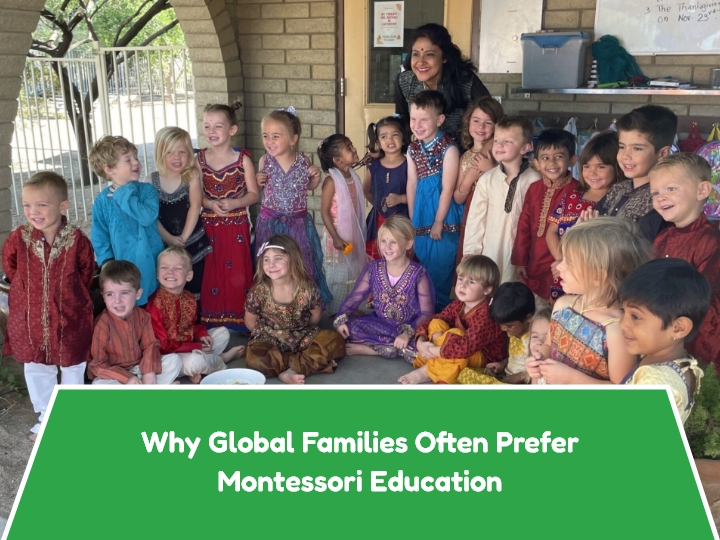
Maria Montessori emphasized raising children with a sense of global awareness, peace, and respect for all cultures. Holidays naturally support that vision. They offer a window into different histories, values, and customs—helping children see both the uniqueness of each tradition and the universal themes that unite us all.
Why the Holidays Are a Meaningful Time for Cultural Exploration
Children are naturally curious, especially during the holiday season when music, lights, decorations, and special foods surround them. A Montessori-inspired cultural approach helps children:
- Develop empathy and understanding
- Recognize and respect cultural differences
- Discover similarities between global celebrations
- Build awareness of the world beyond their immediate community
- Learn geography, history, and cultural vocabulary in meaningful ways
These experiences enrich a child’s understanding of humanity and support the development of peaceful, compassionate world citizens.
A Look at Holiday Traditions Across the Globe
Winter celebrations around the world are diverse, but they often share common themes: light, togetherness, gratitude, generosity, and renewal. Here are a few holidays families may choose to explore with their children—each offering opportunities for meaningful conversations and cultural learning.
Christmas – A Christian Celebration Observed Around the World
Christmas is rooted in Christian tradition and celebrated on December 25th, but it is celebrated in many different ways across the globe—both religiously and culturally. Families may attend church services, exchange gifts, decorate with lights, or gather for special meals. In the United States, Christmas traditions often include decorating a tree, hanging stockings, preparing favorite holiday foods, exchanging gifts, and enjoying festive music and lights. Families may also participate in community events, volunteer activities, or faith-based celebrations, depending on their traditions.
Diwali – India’s Festival of Lights
Diwali is a major Hindu festival, also celebrated by many Sikhs, Jains, and Buddhists, that typically occurs in October or November depending on the lunar calendar. Known as the Festival of Lights, it honors the triumph of light over darkness and good over adversity. Families decorate their homes with lamps called diyas, create colorful rangoli patterns, share sweets, and enjoy fireworks or celebrations. Diwali introduces children to themes of joy, renewal, and the importance of inner and outer light.
Hanukkah – A Jewish Celebration of Light and Dedication
Hanukkah is an eight-night Jewish celebration that usually takes place in late November or December, depending on the Hebrew calendar. Families light the menorah each night to honor a historic miracle in which a small amount of oil lasted for eight days. Traditions often include playing dreidel, enjoying foods cooked in oil like latkes and doughnuts, and spending time with loved ones. Hanukkah highlights themes of perseverance, hope, and the symbolic power of light during the darkest time of year.
Kwanzaa – Honoring African Heritage and Community
Kwanzaa is a weeklong celebration from December 26 to January 1 that honors African heritage and African American culture. Families reflect on seven guiding principles, such as unity, creativity, and working together. The kinara, colorful textiles, music, and storytelling help bring these traditions to life. Kwanzaa encourages children to appreciate cultural identity, family connection, and community values.
Las Posadas – A Mexican Tradition of Community and Hope
Las Posadas is a festive tradition celebrated from December 16 to December 24 in Mexico and many Latin American communities. It includes evening processions with candles, music, and songs that symbolize the journey of Mary and Joseph seeking shelter. After the procession, families often gather for food, piñatas, and shared celebration. Las Posadas highlights themes of welcoming others, supporting community, and sharing joy.
Winter Solstice – A Celebration of Nature and Changing Seasons
The Winter Solstice, the shortest day and longest night of the year, has been celebrated by cultures around the world for thousands of years. Many traditions focus on light—candles, lanterns, or fires—to symbolize the return of longer days. Families may explore seasonal changes by observing shadows, noticing shifts in daylight, or spending time outdoors. The Solstice encourages a deeper appreciation for nature, renewal, and the rhythms of the Earth.
How Families Can Explore Global Holiday Traditions at Home
You don’t need to travel the world—or even leave home—to help children experience the beauty of global traditions. A Montessori-inspired approach encourages simple, respectful, hands-on exploration.
Here are a few ideas that parents can enjoy with their children:
1. Read stories from different traditions
Books are a wonderful way to introduce children to holidays celebrated around the world.
2. Explore world maps
Show children where different holidays originate. This helps make global learning concrete and visual.
3. Listen to cultural music
Holiday songs and traditional music help children experience rhythm, language, and emotion from different cultures.
4. Create simple, meaningful crafts
Creating simple, meaningful projects—such as paper lanterns, rangoli-inspired designs, star ornaments, woven-style patterns, candle holders, or nature-based decorations—helps children connect with the colors, symbols, and traditions found in celebrations around the world.
5. Cook or taste foods from around the world
Trying new flavors can spark curiosity and appreciation for different cultures—no pressure, just exploration.
6. Share your own family traditions
Children love hearing stories about the holidays their families celebrate. This builds identity, belonging, and pride.
A Season of Peace, Respect, and Wonder
The holiday season is a beautiful time to celebrate the rich diversity of global traditions. Whether families choose to explore one holiday or many, a Montessori-inspired approach helps children develop curiosity, kindness, and cultural understanding. These experiences remind us all—young and old—that while our celebrations may look different, the values of connection, gratitude, and peace are shared across the world.
Interested in a School that Values Cultural Awareness?
If you’re interested in an educational environment that nurtures cultural awareness, independence, and a love of learning, we invite you to schedule a tour. Come see firsthand how Montessori principles create a warm, enriching foundation for your child’s growth.