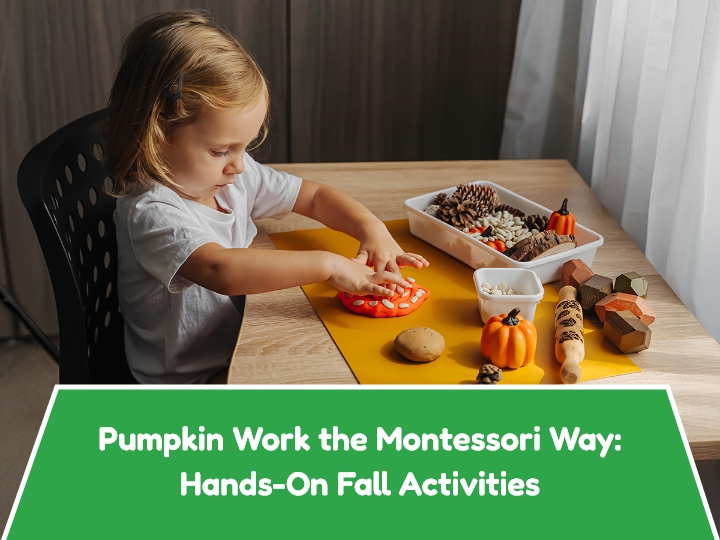
Fall is the season of abundance—cooler weather, colorful leaves, and of course, pumpkins. In a Montessori environment, seasonal work is a wonderful way to connect children to nature, the rhythms of the year, and the joy of purposeful activity. Pumpkins, in particular, offer endless opportunities for hands-on learning that align beautifully with Montessori principles. Whether you’re at home or in the classroom, this versatile fall favorite can become the centerpiece of meaningful, developmentally appropriate work for children of all ages.
Why Pumpkins Work So Well in Montessori
Montessori education emphasizes real, tangible experiences that allow children to use all their senses. Pumpkins are ideal because they naturally engage sight, touch, smell, and even taste. Their variety in size, texture, and color makes them fascinating to explore, and their connection to the harvest season helps children understand cycles in nature.
Pumpkin work can support a wide range of Montessori lessons—practical life, sensorial, math, and language—while fostering concentration and independence. They’re also familiar and meaningful to children, bridging home and school in a warm, seasonal way.
Practical Life Pumpkin Work
Practical life activities lie at the heart of the Montessori method. These everyday tasks help children develop fine motor skills, coordination, independence, and a sense of purpose. Pumpkins provide many opportunities for rich, hands-on practice:
- Washing Pumpkins: Provide a small basin, sponge, and towel. Children can gently scrub dirt from mini pumpkins or gourds, developing hand strength and care for their environment. This activity also encourages mindfulness and attention to detail.
- Polishing Pumpkins: Once clean, offer a soft cloth for polishing. The simple act of making something shine builds pride and focus while refining motor control.
- Scooping and Sorting Seeds: Invite children to scoop seeds from a pumpkin, rinse them in a small bowl, and sort them by size or shape. For an added step, children can lay them out to dry and use them later for counting or art projects.
These simple yet engaging activities are grounding and purposeful, embodying Montessori’s belief that real work leads to real joy.
Sensorial Pumpkin Experiences
Montessori sensorial work helps children classify and make sense of the world through exploration. Pumpkins naturally lend themselves to this area of learning:
- Texture Exploration: Compare the smooth, firm skin of a pumpkin to the slippery, stringy insides.
- Weight and Size Matching: Offer a collection of small pumpkins and gourds for ordering by size or matching by weight.
- Color Variations: Encourage children to notice the subtle differences among pumpkin varieties—orange, yellow, white, and green.
These experiences refine observation skills and heighten awareness of natural diversity.
Math with Pumpkins
The fall harvest provides a perfect backdrop for introducing early math concepts in a meaningful way:
- Counting Seeds: Younger children can count individual seeds into bowls, while older children can group them by tens or create simple bar graphs.
- Measuring Circumference: Using a flexible measuring tape, children can measure the roundness of different pumpkins and record their findings.
- Sorting and Classifying: Arrange pumpkins or gourds by size, shape, or color—building foundational math and scientific thinking skills.
Language Extensions
Language work flows naturally from hands-on experiences. As children interact with pumpkins, introduce rich vocabulary and opportunities for storytelling:
- Vocabulary Building: Teach words like stem, vine, rind, pulp, seed, and harvest.
- Three-Part Cards: Create or use Montessori nomenclature cards for pumpkin parts to support matching, reading, and comprehension.
- Storytelling and Journaling: Encourage children to share memories of pumpkin picking, describe textures and colors, or create short stories about the fall season.
Bringing Fall Into Your Classroom or Home
By adding pumpkin work to your shelves, you invite children to experience the wonder of fall in a meaningful, hands-on way. These activities not only strengthen skills but also nurture a connection to nature and the changing seasons. Whether it’s the joy of polishing a small pumpkin or the excitement of discovering how many seeds are inside, each task helps children slow down, observe, and engage with the world around them.
This fall, let pumpkins be more than decoration—let them become tools for discovery, growth, and joy.
Experience the Montessori Difference This Fall
At Cave Creek Montessori, we bring the beauty of the changing seasons into everyday learning. Our Montessori approach encourages children to explore, create, and grow through purposeful, hands-on activities. Schedule a tour today and see how our Montessori environment nurtures independence, curiosity, and a lifelong love of learning.