For families relocating internationally or raising children in multicultural households, choosing the right educational environment is an important decision. Many global families are looking for more than academics alone. They want a school that values cultural understanding, communication, independence and confidence while helping children feel supported during periods of transition and growth.
This is one reason Montessori education is often a preferred choice for international and multicultural families around the world.
Montessori schools are found across many countries and cultures because the philosophy naturally supports children from diverse backgrounds. Whether a family is relocating for work, navigating multiple languages at home, or seeking a more globally minded educational experience, Montessori education provides a welcoming and adaptable learning environment.
For families moving to Cave Creek, Carefree, North Scottsdale, North Phoenix, or nearby communities due to growing industries like TSMC and other international employers, Montessori education can offer a smooth and supportive transition for young children.
Montessori Education Is Recognized Worldwide
One of the reasons global families are drawn to Montessori education is its international consistency.
The Montessori method was developed by Dr. Maria Montessori over 100 years ago and is now practiced in schools all over the world. While each Montessori school reflects its local culture and community, the core philosophy remains consistent:
- Respect for the child
- Hands-on learning
- Independence
- Self-paced development
- Collaborative classrooms
- Practical life skills
For families relocating from another country, this familiarity can provide comfort and continuity for children adjusting to a new environment.
Children who attended Montessori schools abroad often transition more easily into Montessori classrooms in the United States because many of the materials, routines, and classroom expectations feel familiar.
Montessori Encourages Cultural Awareness and Respect
Authentic Montessori education naturally promotes global awareness and cultural appreciation.
Montessori classrooms often include lessons and materials that introduce children to:
- Geography
- Languages
- World cultures
- Traditions
- Music
- Art
- Global communities
Children learn that differences are valuable and that people from many cultures contribute to the world in meaningful ways.
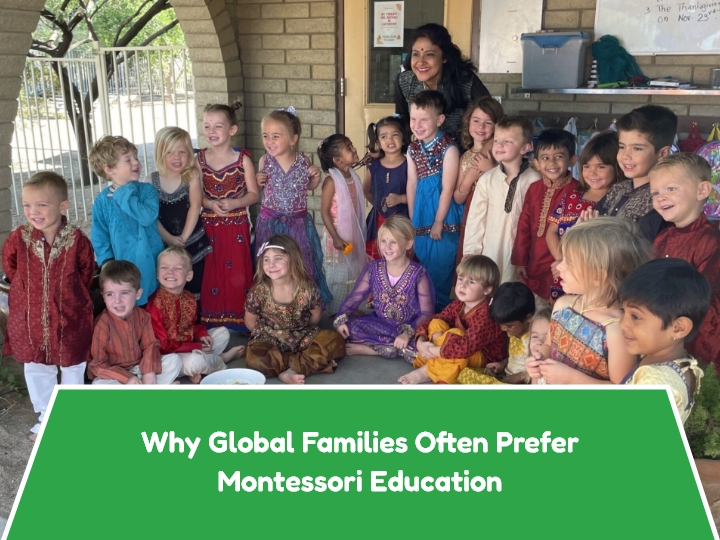
For multicultural and international families, this environment can feel especially welcoming because children see diversity represented and respected within the classroom community.
Montessori Supports Children Learning Multiple Languages
Many global families speak more than one language at home. Montessori education can be especially supportive for multilingual children because it emphasizes individualized learning and hands-on communication.
Montessori classrooms encourage:
- Language development through conversation
- Hands-on vocabulary learning
- Sensory-based activities
- Listening and comprehension skills
- Confidence in communication
Because children progress at their own pace, multilingual learners are often able to build language skills naturally without feeling pressured to keep up with rigid classroom timelines.
Many parents appreciate that Montessori environments focus on building confidence and communication rather than creating stress around language differences.
Montessori Helps Children Transition During Relocation
Moving to a new city or country can be a major adjustment for young children. New routines, new environments, and new social settings can sometimes create anxiety or uncertainty.
Montessori classrooms are intentionally designed to create stability and predictability.
Children benefit from:
- Consistent classroom routines
- Calm learning environments
- Respectful teacher guidance
- Opportunities for independence
- Mixed-age peer support
- Freedom within structure
This balance of structure and independence can help children feel more secure during periods of transition.
For families relocating to Arizona for work opportunities or a new chapter of life, Montessori education often provides a nurturing environment that helps children settle in more comfortably.
Independence Is Valued Across Cultures
Many international families appreciate Montessori education because it encourages practical life skills and independence from an early age.
Children are taught how to:
- Care for themselves
- Solve problems independently
- Respect others
- Manage responsibilities
- Build concentration
- Make thoughtful choices
These skills are valued globally and help children build confidence both academically and socially.
Parents are often surprised by how capable and self-sufficient Montessori students become at a young age.
Montessori Encourages Confidence and Curiosity
Global families often seek educational environments that encourage children to think independently and remain curious about the world around them.
Montessori education supports this by allowing children to:
- Explore their interests
- Learn through discovery
- Develop critical thinking skills
- Build self-motivation
- Take ownership of learning
Rather than focusing heavily on memorization or testing, Montessori classrooms help children develop a lifelong love of learning.
For internationally minded families, this broader approach to education often aligns closely with their educational values and long-term goals.
A Multicultural Community Helps Children Feel Included
One of the greatest benefits of a multicultural Montessori environment is the sense of belonging it creates for children and families.
Children benefit from interacting with classmates from different backgrounds and experiences. They learn empathy, respect, communication, and collaboration naturally through daily interactions.
For parents relocating from another country or navigating multicultural family dynamics, finding a school community that embraces diversity can make a meaningful difference.
Why Families in North Phoenix Are Choosing Montessori
As the North Phoenix area continues to grow and attract families from around the world, many parents are looking for educational environments that combine academic readiness with cultural understanding and emotional support.
Montessori education offers:
- Child-centered learning
- A calm and respectful environment
- Support for independence
- Strong academic foundations
- Multicultural awareness
- Hands-on learning experiences
These qualities make Montessori education especially appealing for families seeking a thoughtful and globally minded approach to early childhood education.
Schedule a Tour at Cave Creek Montessori
Cave Creek Montessori proudly serves families in Cave Creek, Carefree, North Phoenix, Desert Ridge, North Scottsdale, and surrounding communities with authentic Montessori programs for toddlers, preschool, kindergarten, and summer learning.
Our multicultural learning environment helps children build confidence, independence, curiosity, and respect for others while supporting each child’s unique developmental journey.
If you are looking for a nurturing Montessori school that welcomes families from diverse backgrounds, we invite you to schedule a tour and experience the Cave Creek Montessori difference.
FAQs About Montessori Education for Global Families
Why do international families choose Montessori schools?
Many international families choose Montessori schools because the Montessori philosophy is recognized worldwide and supports independence, hands-on learning, cultural awareness, and individualized education.
Is Montessori good for multilingual children?
Yes. Montessori education supports language development naturally through conversation, hands-on learning, and individualized instruction, making it a strong fit for multilingual learners.
Can Montessori help children adjust after moving to a new country?
Montessori classrooms provide consistent routines, calm environments, and supportive learning experiences that can help children feel more secure during transitions and relocation.
Are Montessori schools multicultural?
Many Montessori schools embrace multicultural education by exposing children to different languages, cultures, traditions, geography, and global perspectives.
Does Montessori encourage independence?
Yes. Independence is a core part of Montessori education. Children are encouraged to make choices, solve problems, care for themselves, and develop responsibility from an early age.
Why do global families value Montessori education?
Global families often appreciate Montessori education because it supports curiosity, confidence, adaptability, cultural awareness, and lifelong learning skills that benefit children anywhere in the world.
What ages can attend Montessori programs?
Many Montessori schools offer programs for toddlers, preschool-aged children, kindergarten students, and elementary-aged children depending on the school.
How do I know if Montessori is right for my child?
Montessori may be a good fit for children who benefit from hands-on learning, independence, individualized instruction, and a calm, respectful classroom environment.