Every parent hopes to raise a child who is confident, capable, and ready to face the world with curiosity and resilience. But confidence and independence don’t just appear overnight — they grow over time, nurtured by the right environment and opportunities. That’s exactly what Montessori education is designed to do.
From the moment a child steps into a Montessori classroom, they are invited to make choices, take responsibility, and discover the joy of learning on their own terms. This approach doesn’t just prepare them academically; it builds a foundation of confidence and independence that serves them for life.
Here’s a closer look at how Montessori education fosters these essential qualities.
Confidence Through Choice
In many traditional classrooms, children are told what to do and when to do it. While structure has its place, it can sometimes limit a child’s ability to make decisions or explore their interests.
In a Montessori classroom, choice is central. Children are given the freedom to select activities that spark their curiosity, whether it’s building with math beads, exploring letters, practicing pouring water, or arranging flowers. These choices are never random — every material in the classroom is designed with a purpose, and the Montessori guide carefully observes when a child is ready for new challenges.
When children are trusted to choose their work, they feel respected. This respect translates into confidence. Each decision builds their ability to trust themselves and take ownership of their learning. Over time, they become self-assured in trying new things and solving problems independently.
Independence Through Responsibility
Montessori classrooms are intentionally designed so children can do things for themselves. Furniture is child-sized, materials are displayed on low shelves, and everything is arranged neatly so children know where to find what they need.
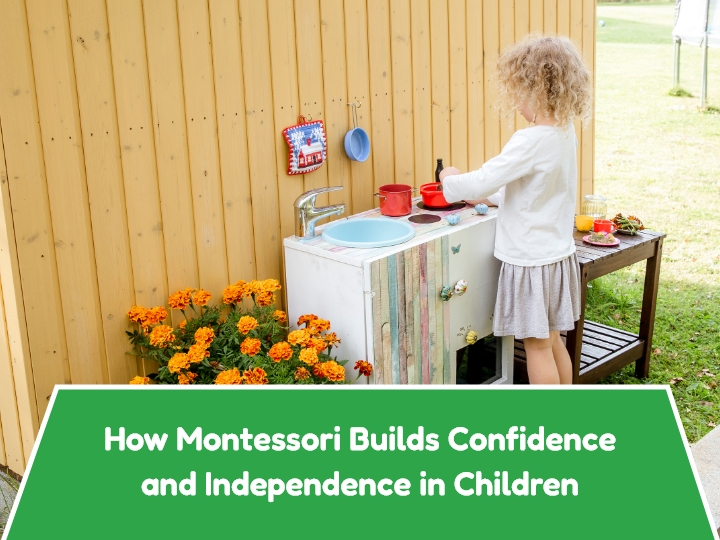
Children learn to pour their own drinks, sweep up crumbs, polish shoes, care for plants, and clean up after activities. At first, these tasks may seem simple, but they carry powerful lessons. When a child realizes, “I can do it myself,” they gain both independence and pride.
This independence doesn’t just help in the classroom — it carries into daily life at home. Parents often notice their Montessori child wants to help with cooking, get dressed on their own, or take on small household responsibilities. These skills nurture a sense of capability and readiness for bigger challenges.
Learning at Their Own Pace
In traditional settings, children are often expected to progress through lessons at the same rate as their peers. Some children may feel rushed, while others become bored waiting for the group to catch up.
Montessori education honors each child’s unique pace. A child may spend days, weeks, or even months mastering a concept, and that’s celebrated. No one is pushed before they are ready, nor are they held back when they’re eager to move forward.
This self-paced approach removes the pressure of comparison. Children learn to measure success by their own growth, not by someone else’s standard. That self-knowledge is deeply empowering and builds lasting confidence.
Mixed-Age Classrooms Build Leadership and Empathy
Another unique feature of Montessori education is the mixed-age classroom. Instead of grouping children strictly by age, Montessori classrooms span three years (for example, ages 3–6).
This creates a natural cycle of learning:
- Younger children look up to older classmates, learning from their example.
- Older children reinforce their knowledge by helping younger peers.
- All children benefit from being part of a community where everyone contributes.
For the older children especially, this mentorship builds leadership skills and confidence. Teaching a concept to a younger classmate requires patience, empathy, and clear communication — invaluable skills that extend beyond the classroom.
Real-Life Skills That Build Self-Esteem
Confidence grows when children know they can take care of themselves and their environment. Montessori emphasizes practical life skills alongside academics.
Children learn to:
- Prepare snacks
- Wash dishes
- Button clothing
- Water plants
- Care for classroom pets
- Set tables and serve others
These tasks may appear small, but for children, they are huge accomplishments. When a child proudly announces, “I cut the fruit for snack today!” they’re building both competence and self-esteem.
Practical life activities also develop fine motor skills, concentration, and coordination — laying the groundwork for future academic success.
Problem-Solving Without Fear of Failure
Confidence doesn’t mean never making mistakes; it means knowing how to handle them. In Montessori classrooms, mistakes are seen as part of the learning process. Materials are designed to be self-correcting, allowing children to recognize and fix errors on their own.
For example, if a child is working with knobbed cylinders and one piece doesn’t fit, they immediately know something is off. Instead of being told they’re “wrong,” they’re encouraged to try again. This builds resilience, patience, and problem-solving skills — all key to confidence and independence.
Respect Builds Self-Worth
At the heart of Montessori education is respect — for the child, for others, and for the environment. Children are treated as capable individuals whose thoughts and choices matter. This respect is powerful. When children feel valued and trusted, their self-worth blossoms.
Montessori guides model respect by listening to children, giving them space to work independently, and encouraging them to express themselves. This culture of respect creates a safe space for children to take risks, explore, and grow.
Long-Term Impact of Montessori Confidence
The confidence and independence children build in Montessori classrooms extend far beyond preschool. Montessori graduates often transition into elementary school with strong self-motivation, resilience, and a love of learning. They are used to problem-solving, working with others, and taking responsibility for themselves.
These qualities don’t just support academic success — they prepare children for life. Confident, independent children are better equipped to face challenges, adapt to change, and pursue their passions with courage.
Why Parents Choose Cave Creek Montessori
At Cave Creek Montessori, we believe every child is capable of remarkable growth when given the right environment. Our classrooms are carefully prepared to nurture independence, responsibility, and confidence from the very first day.
Parents often tell us they notice changes at home: their child wants to help more, take on new challenges, and express themselves with greater assurance. That’s the Montessori difference.
If you want to see how Montessori education builds confidence and independence in children, we invite you to schedule a tour at Cave Creek Montessori. Come watch our classrooms in action and discover how your child can thrive.
Frequently Asked Questions
How does Montessori build confidence in children?
Montessori builds confidence by allowing children to make choices, solve problems, and master new skills at their own pace. As children complete meaningful work independently, they develop self-esteem, resilience, and the confidence to take on new challenges.
Why is independence important in Montessori education?
Independence is a core principle of Montessori education. Children are encouraged to care for themselves, make decisions, complete tasks, and take responsibility for their learning. These experiences help develop confidence, responsibility, and lifelong problem-solving skills.
How does Montessori encourage independent learning?
Montessori classrooms are designed to allow children to choose activities, work independently, and progress according to their individual readiness. Teachers provide guidance while encouraging children to think critically, make decisions, and discover solutions on their own.
At what age do children begin learning independence in Montessori?
Children begin developing independence as early as 18 months old. Through age-appropriate practical life activities, children gradually learn skills such as dressing themselves, cleaning up, preparing snacks, organizing materials, and caring for their classroom environment.
Does Montessori help shy or timid children gain confidence?
Many children become more confident in a Montessori environment because they are encouraged to learn without constant comparison or competition. Working at their own pace and experiencing success through hands-on learning helps many children become more comfortable trying new things and interacting with others.
What activities help children become more independent?
Montessori practical life activities such as pouring, buttoning, sweeping, food preparation, organizing materials, watering plants, and cleaning up after themselves teach children responsibility while strengthening coordination, concentration, and self-confidence.
How do confidence and independence prepare children for kindergarten?
Confident, independent children often transition more smoothly into kindergarten because they are comfortable making decisions, following routines, solving simple problems, working independently, and interacting positively with teachers and classmates.
How does Cave Creek Montessori help children build confidence and independence?
At Cave Creek Montessori, children are encouraged to make choices, solve problems, develop practical life skills, and learn through hands-on experiences in a supportive environment. Experienced Montessori teachers guide each child while fostering the confidence, independence, and love of learning that prepare them for future success.