One of the most distinctive features of a Montessori preschool and kindergarten is the multi-age classroom. Unlike traditional classrooms that group children by a single age or grade level, Montessori classrooms typically span a three-year age range. For example, a preschool and kindergarten classroom may include children from ages 3 to 6.
This intentional mix of ages may seem unusual at first, but it’s actually one of the most powerful aspects of Montessori education. The multi-age classroom fosters an authentic learning community, where children not only gain academic knowledge but also develop important life skills like leadership, collaboration, and empathy.
What Is a Multi-Age Montessori Classroom?
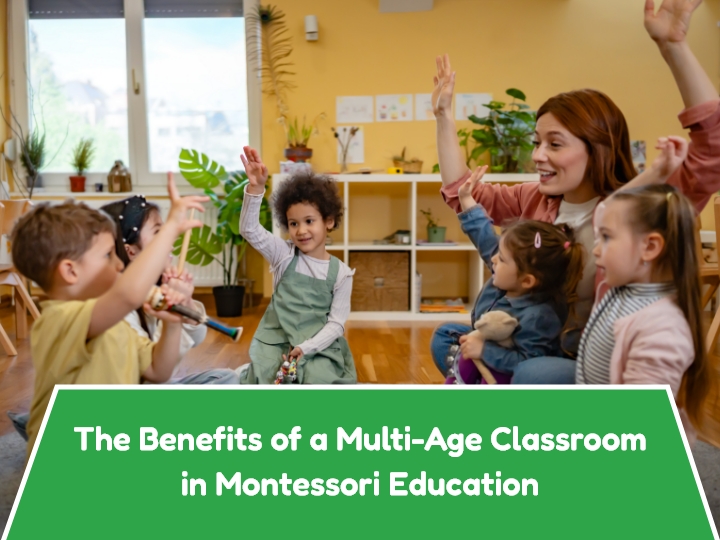
In a Montessori classroom, children of different ages learn together in a thoughtfully prepared environment designed to support growth at every stage. Younger children naturally observe and learn from older peers, gaining exposure to more advanced skills and behaviors. At the same time, older children deepen their understanding by demonstrating lessons, offering guidance, and mentoring younger classmates.
This dynamic creates a balanced learning environment where children are both learners and leaders. Instead of following a rigid, one-size-fits-all curriculum, each child progresses at their own pace based on readiness and interest. This flexible structure mirrors real-world learning, where individuals collaborate across ages and skill levels, and helps foster a strong sense of community, independence, and mutual respect.
Here are some of the key benefits of a multi-age classroom:
1. Leadership and Mentorship Opportunities
In a Montessori multi-age classroom, leadership develops naturally over time. Older children take on roles as helpers and role models, showing younger students how to use materials, follow routines, and navigate the classroom. Teaching others reinforces their own learning while building confidence and responsibility.
Younger children benefit from observing and learning from peers in a way that feels approachable and encouraging. This creates a supportive environment where children learn from one another, building confidence, independence, and a strong sense of community.
Younger children:
- Observe older students completing more advanced work
- Develop language, social skills, and confidence more quickly
- Feel inspired to grow into the “older student” role
Older children:
- Reinforce their knowledge by helping others
- Develop leadership and communication skills
- Build confidence and responsibility
This dynamic creates a classroom culture where learning is not just teacher-led—it becomes community-driven.
2. Learning at One’s Own Pace
In a traditional classroom, children are often expected to move through the same material at the same pace, regardless of their individual readiness. In a Montessori multi-age classroom, learning is more flexible and personalized allowing children to learn at their own pace. Children progress based on their developmental stage and interest, not just their age. For example, a 4-year-old may be ready for early reading, while a 5-year-old may still be working on foundational math skills. The flexibility of the Montessori method ensures that each child is challenged appropriately, without pressure or comparison.
This individualized approach allows each child to fully understand concepts before moving on, rather than feeling rushed or held back. It removes the pressure of comparison and helps children build confidence as they experience success at their own pace, fostering a deeper and more lasting love of learning.
3. Reinforcement Through Teaching
Research shows that one of the most effective ways to truly understand a concept is to teach it to someone else. In a Montessori multi-age classroom, older children naturally have opportunities to do this by helping younger classmates with lessons and activities. As they explain concepts or demonstrate materials, they reinforce their own knowledge and gain a deeper level of understanding.
At the same time, this process helps children develop important life skills like patience, empathy, and clear communication. They learn how to support others, which builds confidence and strengthens both academic and social growth in a meaningful way.
4. Encourages Independence
Montessori classrooms are designed to help children become independent learners, and the multi-age environment naturally supports that growth. Children are given the freedom to choose their work based on their interests and readiness, allowing them to take ownership of their learning. They learn how to manage their time, complete tasks, and solve problems on their own, building confidence with each success.
Rather than relying on constant direction from a teacher, children develop self-discipline and motivation from within. This focus on independence not only supports academic growth but also helps children build essential life skills that carry with them far beyond the classroom.
5. Stronger Sense of Community
When children remain in the same Montessori classroom for multiple years, strong and lasting relationships naturally develop. They build meaningful connections with their teachers and classmates, creating a sense of comfort and familiarity in their daily environment. Instead of having to adjust to a new teacher and peer group each year, children continue learning alongside people they know and trust.
This consistency helps children feel secure and confident, which is essential for both emotional development and academic growth. When children feel safe and supported, they are more willing to take risks, try new things, and fully engage in the learning process.
6. Reduced Competition, Increased Collaboration
Because children in a Montessori classroom are working at different levels, there is less direct comparison between peers. Instead of feeling pressure to keep up or compete, children are encouraged to focus on their own progress and growth. In traditional classrooms, children are often compared to peers of the same age. In Montessori, the multi-age structure removes that pressure and replaces it with growth over time.
This naturally creates a more cooperative environment where students support one another. Children learn to celebrate each other’s successes, offer help when needed, and work together respectfully. Over time, this builds a strong sense of community where each child feels valued for their unique strengths and contributions.
7. Supports Social and Emotional Development
Multi-age classrooms reflect real-world environments where individuals of different ages interact, collaborate, and support one another. Within this setting, children naturally develop important social and emotional skills such as empathy, patience, and respect for others.
Younger children learn how to ask for help and engage with more experienced peers, while older children develop leadership skills by guiding and supporting those around them. This balanced dynamic creates a classroom culture built on understanding, cooperation, and mutual respect, helping children grow both socially and emotionally.
8. Creates a Stable, Consistent Learning Environment
Another major advantage of a Montessori multi-age classroom is the continuity it provides. Children typically remain in the same classroom for multiple years, allowing them to build strong, lasting relationships with their teachers and classmates. This familiarity helps children feel comfortable and secure in their environment, which is essential for both emotional well-being and academic growth.
With fewer transitions, children experience less stress and more confidence as they navigate their daily routines. For families in North Scottsdale and North Phoenix, this consistency offers peace of mind, knowing their child is learning in a stable, supportive environment year after year.
9. Holistic Development
In a multi-age classroom, children are not limited by expectations tied strictly to their age. Instead, teachers look at the whole child—recognizing that development happens at different rates socially, emotionally, and academically.
This allows educators to guide each child based on their individual needs and readiness, rather than a fixed grade-level standard. As a result, children receive more personalized support, helping them grow with confidence and develop skills in a way that feels natural and appropriate for them.
10. Prepares Children for Kindergarten and Beyond
A Montessori multi-age classroom does more than support early childhood—it prepares children for future academic success.
By the time children leave the classroom, they have developed:
- Strong problem-solving skills
- Confidence in independent work
- The ability to collaborate and lead
These are the same qualities that help children thrive in kindergarten.
Come See the Benefits of a Mixed-Age Classroom
A multi-age classroom is more than just a structure—it’s a core part of Montessori education that helps children grow into confident, capable, and compassionate learners. By supporting independence, collaboration, and individualized learning, it creates an environment where every child can thrive.
Contact us today to schedule a tour and learn more about how a Montessori multi-age classroom can help your child thrive.
Frequently Asked Questions
What is a multi-age classroom in Montessori education?
A multi-age classroom groups children of different ages together, typically across a three-year age span. This allows younger children to learn by observing older classmates while older children reinforce their knowledge by mentoring younger students, creating a collaborative learning environment.
Why are Montessori classrooms multi-age?
Montessori classrooms are intentionally designed to include children of different ages because it reflects how children naturally learn from one another. Mixed-age classrooms encourage leadership, cooperation, patience, independence, and individualized learning rather than competition based on age.
What are the benefits of a multi-age Montessori classroom?
Multi-age Montessori classrooms help children develop confidence, communication skills, leadership, empathy, problem-solving abilities, and independence. They also allow every child to progress at their own pace while building meaningful relationships with classmates over multiple years.
Do younger children learn from older students in Montessori?
Yes. Younger children often learn by observing older classmates working with Montessori materials and classroom routines. This natural modeling helps younger students gain confidence, develop new skills, and become excited about future learning opportunities.
How do older children benefit from a mixed-age classroom?
Older students strengthen their own understanding by helping younger classmates, demonstrating classroom expectations, and serving as role models. Teaching others reinforces learning while building leadership, patience, responsibility, and self-confidence.
Are multi-age classrooms better than traditional classrooms?
Every child is different, but many families appreciate that Montessori’s multi-age classrooms encourage individualized learning instead of comparing children by grade level. Students can advance when they’re ready while developing academic, social, and emotional skills in a supportive environment.
Will my child receive individual attention in a multi-age Montessori classroom?
Yes. Montessori teachers observe each child’s progress and provide lessons based on individual readiness rather than age or grade level. This personalized approach allows children to receive support and challenges that match their developmental needs.
Why do parents choose Montessori’s multi-age classrooms?
Many parents choose Montessori because mixed-age classrooms foster independence, leadership, collaboration, respect, and a lifelong love of learning. Children develop strong academic foundations while also building important social and emotional skills that prepare them for future success.