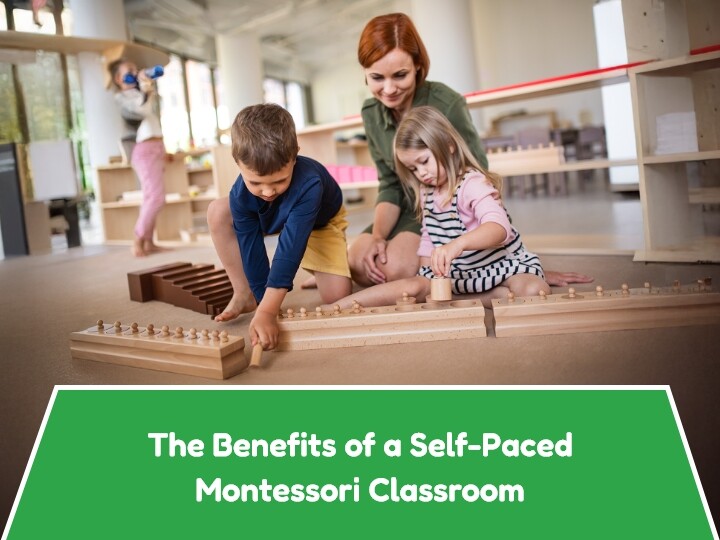
One of the most distinctive features of an authentic Montessori education is the self-paced learning environment. Instead of every child moving through lessons at the same speed, Montessori classrooms recognize that each child has unique strengths, challenges, interests, and developmental rhythms. When children are given the freedom to learn at their own pace—within a thoughtfully prepared environment—they thrive academically, socially, and emotionally.
Below are some of the most meaningful benefits of a self-paced Montessori classroom and why so many families choose Montessori for a nurturing, individualized start to their child’s educational journey.
1. Children Develop Confidence Through Independence
In a self-paced Montessori classroom, children take an active role in choosing their work, managing their time, and engaging deeply in lessons that interest them. This autonomy fosters a strong sense of independence.
When children complete lessons on their own and see the results of their efforts, they build authentic confidence—not from praise alone, but from real accomplishments. This confidence transfers into all areas of their learning and daily life.
2. Learning Becomes More Meaningful and Purposeful
Children are naturally curious, and when they’re allowed to follow what captures their interest, learning becomes joyful and engaging. Self-paced classrooms give students the time they need to explore concepts fully instead of rushing through material to keep up with a rigid timeline.
For some children, reading may come quickly. For others, math may be where they shine. In a Montessori environment, both children can excel without feeling pressured or held back.
3. Children Build Deep Focus and Concentration
One of the most remarkable outcomes of self-paced learning is the development of concentration. Montessori classrooms allow children to work uninterrupted during extended periods, often resulting in what Maria Montessori described as “deep work.”
This uninterrupted focus helps children:
- Strengthen cognitive processing
- Improve problem-solving skills
- Develop perseverance
- Learn to enjoy the process of mastering new skills
Over time, children learn how to direct their own attention—an invaluable life skill.
4. Teachers Are Free to Teach, Guide, and Support Individual Needs
In a self-paced environment, teachers act as observers and guides. Rather than standing in front of the class delivering a single lesson to everyone, Montessori teachers meet children where they are developmentally.
This individualized approach allows teachers to:
- Offer new lessons as each child is ready
- Support students who need extra time
- Encourage children who are ready to move ahead
- Observe each child’s interests and strengths
- Build trusting, meaningful relationships
Because children aren’t rushed or compared to peers, teachers can focus on nurturing their natural growth.
5. Multi-Age Classrooms Support Natural Mentorship
Most Montessori classrooms are multi-age which strengthens the self-paced model. Younger children observe older children completing advanced work and naturally aspire to try new things. Older children reinforce their learning by helping younger peers.
This dynamic builds a caring, community-focused environment where every child feels valued at their own stage of development.
6. Children Learn to Love Learning—Not Just the Outcome
A self-paced Montessori classroom removes the pressure of competing with peers or rushing through lessons just to finish. Instead, children develop a lifelong love for learning because they:
- Explore topics at their own speed
- Experience hands-on, real-world materials
- Feel encouraged instead of pressured
- Develop intrinsic motivation
When learning is enjoyable and meaningful, children carry that mindset through elementary school, middle school, and beyond.
7. Self-Paced Montessori Learning Builds the Whole Child
While academics are important, Montessori education focuses on supporting the whole child. Self-paced learning nurtures:
- Social-emotional development
- Responsibility and accountability
- Time management
- Critical thinking
- Creativity
- Self-regulation
Children grow into confident, capable learners who feel empowered in their abilities.
Experience the Montessori Difference for Yourself
A self-paced Montessori classroom gives children the freedom and structure they need to flourish. If you’re exploring toddler, preschool or kindergarten options and want an approach that builds confidence, independence, and a true love of learning, we’d love to show you what makes Montessori unique.
Schedule a tour today to experience an authentic Montessori environment and see how a self-paced classroom can support your child’s growth.
Frequently Asked Questions
What is self-paced learning in Montessori?
Self-paced learning allows children to progress through lessons based on their individual readiness rather than a fixed schedule. Montessori teachers introduce new concepts when children are prepared, helping them develop confidence, understanding, and a genuine love of learning.
Does self-paced learning help children learn better?
For many children, yes. Self-paced learning allows children to fully understand one concept before moving on to the next. Instead of feeling rushed or held back, children build strong academic foundations while developing confidence and problem-solving skills.
Will my child fall behind in a self-paced Montessori classroom?
No. Montessori teachers closely observe each child’s progress and provide individualized lessons that match their developmental readiness. Children continue to make steady academic progress while mastering concepts at a pace that supports long-term success.
What are the benefits of self-paced learning for preschoolers?
Self-paced learning helps preschoolers develop independence, concentration, confidence, curiosity, and a positive attitude toward learning. It also reduces unnecessary pressure, allowing children to master skills before moving on to new challenges.
How do Montessori teachers know when a child is ready for the next lesson?
Montessori teachers continuously observe each child’s progress during daily classroom activities. When a child demonstrates understanding and readiness, the teacher introduces new materials and lessons that build naturally on previously learned skills.
Is Montessori self-paced learning better than traditional classroom learning?
Every child learns differently, but many families appreciate Montessori because children are challenged according to their individual readiness rather than expected to learn at the same pace as everyone else. This personalized approach helps build confidence while supporting academic, social, and emotional growth.
Does self-paced learning prepare children for kindergarten?
Yes. Self-paced Montessori learning helps children develop strong reading, math, language, practical life, and social skills while encouraging independence, responsibility, and critical thinking. These qualities help children transition successfully into kindergarten.
How does Cave Creek Montessori support self-paced learning?
At Cave Creek Montessori, teachers carefully observe each child’s development and provide individualized lessons that encourage growth without unnecessary pressure. Children are challenged when they are ready, helping them build confidence, independence, and a lifelong love of learning.