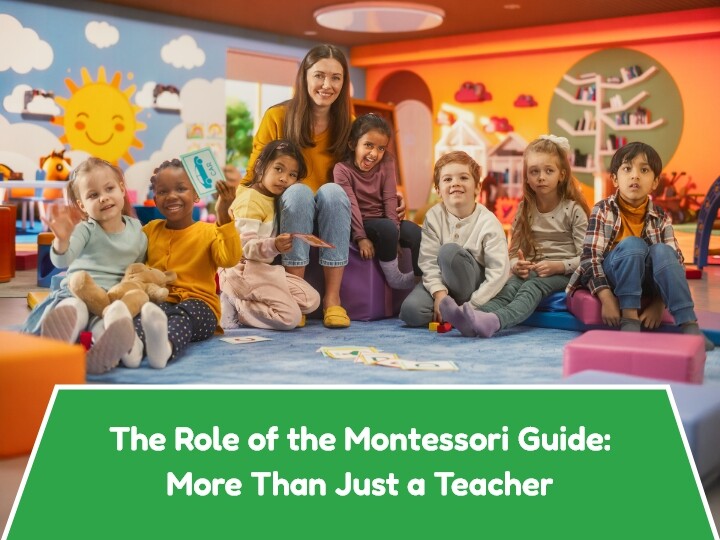
In a traditional classroom, the teacher stands at the front of the room, gives instructions, and leads the learning. In a Montessori classroom, things look a little different. You won’t see rows of desks or hear the teacher constantly giving directions. Instead, you’ll notice calm, purposeful activity—and at the heart of it all is the Montessori guide.
At Cave Creek Montessori, our guides do much more than teach—they observe, inspire, and support each child’s unique path of development. Their role is one of quiet leadership, helping children learn not just academics, but independence, empathy, and confidence.
Let’s take a closer look at how a Montessori guide differs from a traditional teacher—and why that matters so much during the early years of your child’s education.
A Guide, Not a Lecturer
Montessori educators are often called “guides” because their role is to lead children toward discovery—not to simply deliver information. Rather than standing in front of the class and teaching everyone the same lesson at the same time, the guide works one-on-one or in small groups, introducing materials when the child is ready.
This personalized approach helps children feel seen, supported, and empowered in their learning. The guide doesn’t interrupt the child’s natural curiosity—they nurture it.
Observing Before Intervening
Observation is one of the most important responsibilities of a Montessori guide. Each day, the guide carefully watches how children interact with materials, how they respond to challenges, and when they’re ready to move forward.
This close observation allows the guide to provide just the right lesson at the right time, keeping the child challenged but not overwhelmed. It’s a delicate balance—and it’s one of the reasons Montessori education is so effective at meeting each child’s individual needs.
Fostering Independence
Montessori guides are trained not to do for the child what the child can do for themselves. Instead of jumping in to help tie a shoe or clean up a spill, they take the time to show the child how—and then step back.
This builds real-world skills and, more importantly, self-confidence. Children begin to see themselves as capable, competent, and responsible for their own actions. That sense of ownership is powerful, and it lasts far beyond the preschool years.
Creating a Peaceful Environment
Montessori guides model calmness, respect, and grace. Rather than using loud voices or rewards and punishments, they use gentle guidance and positive reinforcement. They help children navigate social interactions with kindness and teach conflict resolution through respectful communication.
By setting the tone, the guide creates a classroom environment where children feel safe, respected, and emotionally supported—the ideal setting for learning and growth.
Partnering with Parents
A Montessori guide’s role extends beyond the classroom. At Cave Creek Montessori, our guides regularly communicate with parents, offering insights, encouragement, and ideas for supporting learning at home.
We believe that children thrive best when there is a strong partnership between home and school—and our guides are here to support your family every step of the way.
See the Montessori Difference in Action
The role of a Montessori guide is one of deep care, intentionality, and respect for the child’s natural development. They are more than teachers—they are mentors, observers, and advocates for your child’s growth.
We invite you to come see the difference a Montessori guide can make in your child’s education.
Schedule a tour of Cave Creek Montessori today and experience a classroom where children are not just taught—they are truly guided to reach their full potential.
Frequently Asked Questions
What is the role of a Montessori guide?
A Montessori guide supports each child’s learning by observing, encouraging, and introducing lessons when the child is developmentally ready. Rather than leading the entire class through the same lesson, the guide helps children discover concepts independently while building confidence, responsibility, and a love of learning.
How is a Montessori guide different from a traditional teacher?
Unlike a traditional teacher who typically directs the whole class, a Montessori guide serves as a mentor and facilitator. They observe each child’s progress, provide individualized lessons, and encourage children to learn through hands-on exploration and independent discovery.
Why are Montessori teachers called guides?
Montessori educators are called guides because their role is to support and direct each child’s natural development rather than simply deliver information. They create opportunities for children to explore, ask questions, solve problems, and develop confidence through meaningful experiences.
How do Montessori guides know what to teach each child?
Montessori guides carefully observe each child’s interests, progress, strengths, and readiness. Based on these observations, they introduce new lessons and materials at the appropriate time so children remain challenged without becoming frustrated or overwhelmed.
Do Montessori guides help children become more independent?
Yes. Montessori guides encourage children to complete tasks on their own whenever possible. Instead of doing things for children, they demonstrate new skills, provide encouragement, and allow children to develop confidence by solving problems independently.
Are Montessori guides specially trained?
Yes. Authentic Montessori guides complete specialized Montessori training focused on child development, observation, classroom preparation, and the effective use of Montessori materials. This training helps them meet each child’s individual developmental needs.
How do Montessori guides communicate with parents?
Montessori guides partner closely with families by sharing observations about each child’s progress, celebrating milestones, and offering suggestions to support learning and independence at home. Strong communication between school and home helps children thrive.
Why choose Cave Creek Montessori?
For more than 25 years, Cave Creek Montessori has provided authentic Montessori education led by experienced Montessori guides who nurture each child’s academic, social, and emotional growth. Our family-owned school creates a warm, supportive environment where children develop confidence, independence, and a lifelong love of learning.