Many parents assume that children need to move through lessons at the same pace as everyone else to be ready for kindergarten. When they hear that Montessori education is “self-paced,” it’s natural to wonder if their child will be academically prepared.
The truth is that self-paced learning isn’t about slowing children down—it’s about helping them build a strong foundation before moving on. Rather than focusing on keeping up with a class, Montessori helps each child master essential skills, develop confidence, and become an independent learner. Those qualities are exactly what help children thrive in kindergarten and beyond.
What Is Self-Paced Learning?
Self-paced learning means children progress when they’re ready—not according to a predetermined classroom schedule.
In a traditional classroom, every child often learns the same lesson on the same day. Some children may already understand the concept, while others need additional practice.
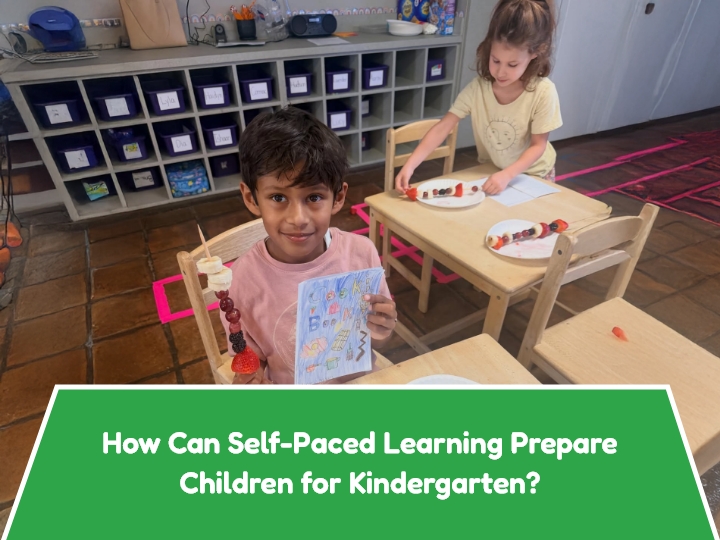
In a Montessori classroom, teachers observe each child’s readiness and present new lessons after the child has mastered previous skills. This individualized approach allows every child to build confidence while continuing to grow academically.
Kindergarten Readiness Is More Than ABCs and 123s
Parents often think kindergarten readiness is measured only by reading, writing, and math.
While academic skills are important, today’s kindergarten teachers also look for children who can:
- Follow directions
- Work independently
- Solve simple problems
- Focus on tasks
- Communicate respectfully
- Cooperate with classmates
- Manage daily routines
- Show curiosity and confidence
Montessori develops these essential life skills every day through purposeful, hands-on learning.
Mastery Creates Stronger Learners
One reason self-paced learning is so effective is that children aren’t rushed before they’re ready.
Instead of memorizing information for the next worksheet or test, children fully understand concepts before moving forward.
For example:
A child who truly understands counting with Montessori materials develops a stronger math foundation than a child who simply memorizes numbers.
A child who develops phonemic awareness before reading often becomes a more confident and capable reader.
This emphasis on mastery helps children enter kindergarten with lasting knowledge rather than short-term memorization.
Independence Is One of the Greatest Kindergarten Skills
One of the biggest differences kindergarten teachers notice about Montessori students is their independence.
Throughout the day, Montessori children learn to:
- Choose meaningful work
- Care for classroom materials
- Complete tasks independently
- Clean up after themselves
- Solve problems before asking for help
- Make thoughtful decisions
These habits build confidence and prepare children for the greater expectations of elementary school.
Children Learn at Different Speeds
Every child develops differently.
Some children begin reading early.
Others excel in math.
Some become exceptional problem-solvers or demonstrate remarkable concentration before showing interest in writing.
Montessori respects these natural developmental differences instead of comparing children to one another.
Because teachers closely observe each child’s progress, they know when it’s time to introduce the next lesson or provide additional support.
Self-Paced Doesn’t Mean Unstructured
A common misconception is that Montessori classrooms allow children to do whatever they want.
In reality, authentic Montessori classrooms are highly structured.
Teachers carefully prepare the environment, present lessons in a logical sequence, and monitor every child’s academic and social development.
Children are given freedom within clear expectations, helping them develop responsibility alongside independence.
Social and Emotional Readiness Matters Too
Academic skills alone don’t determine kindergarten success.
Children also benefit from learning how to:
- Work with classmates
- Respect others
- Resolve conflicts peacefully
- Build friendships
- Express emotions appropriately
- Develop resilience when faced with challenges
Mixed-age Montessori classrooms naturally provide opportunities for children to learn from older classmates while becoming mentors themselves as they grow.
Long-Term Success Starts With Confidence
Children who enjoy learning are more likely to continue seeking new challenges.
Instead of worrying about keeping pace with classmates, Montessori students learn to trust their abilities, ask questions, persevere through challenges, and take pride in their accomplishments.
These qualities support academic success throughout elementary school and beyond.
How Cave Creek Montessori Prepares Children for Kindergarten
At Cave Creek Montessori, our experienced teachers guide children through an authentic Montessori curriculum designed to prepare them academically, socially, and emotionally for kindergarten.
Children develop:
- Early reading and language skills
- Mathematical thinking
- Fine motor development
- Practical life skills
- Concentration
- Independence
- Problem-solving
- Confidence
- Respect for others
- A lifelong love of learning
Every lesson builds toward helping children become capable, curious, and prepared for the next stage of their educational journey.
Schedule a Tour
The best way to understand how self-paced learning prepares children for kindergarten is to see it in action.
At Cave Creek Montessori, we’ve been helping children ages 18 months through kindergarten build confidence, independence, and academic readiness for more than 25 years. Our authentic Montessori environment encourages every child to learn at the pace that’s right for them while developing the skills they need for lifelong success.
Schedule a tour today and discover how Montessori prepares children not just for kindergarten—but for a lifetime of learning.
Frequently Asked Questions
How does self-paced learning prepare children for kindergarten?
Self-paced learning helps children master foundational skills before moving on to more advanced concepts. In a Montessori classroom, teachers introduce lessons when children are developmentally ready, building confidence, independence, and strong academic foundations that prepare them for kindergarten.
Does self-paced learning slow children down?
No. Self-paced learning allows children to spend extra time where needed while moving ahead quickly in areas they master easily. This individualized approach supports deeper understanding rather than simply keeping pace with the class.
What kindergarten skills do Montessori children develop?
Montessori children develop early literacy, math readiness, concentration, independence, problem-solving, communication, and social skills. They also learn practical life skills such as following routines, caring for materials, and working independently.
Are Montessori students ready for traditional kindergarten?
Yes. Many Montessori students transition successfully into both public and private kindergarten programs. They often enter with strong academic foundations, confidence, self-discipline, and a love of learning.
Why is mastery more important than moving quickly?
Mastery helps children fully understand concepts before advancing. This creates stronger long-term learning and greater confidence than simply moving through lessons because everyone else is doing so.
How do Montessori teachers know when a child is ready for the next lesson?
Montessori teachers observe each child’s progress daily. They introduce new lessons after a child demonstrates understanding and readiness, ensuring learning builds naturally and successfully.
Is self-paced learning good for advanced learners?
Yes. Advanced learners can continue progressing without waiting for the rest of the class. Montessori allows children to explore increasingly challenging materials as they demonstrate mastery.
Does self-paced learning help children become more independent?
Absolutely. Montessori encourages children to make choices, solve problems, complete tasks independently, and take responsibility for their learning. These skills help children transition confidently into kindergarten.