When parents choose a preschool, they naturally think about academic preparation. Will their child learn to read? Will they develop strong math skills? Will they be ready for kindergarten and elementary school?
These are important considerations, but some of the most valuable lessons children learn during their early years can’t be measured by reading levels or math worksheets.
Learning how to solve problems, manage responsibilities, work with others, and persevere through challenges can influence a child’s success long after preschool ends.
Montessori education helps children develop lifelong skills that extend beyond academics, including independence, critical thinking, concentration, adaptability, responsibility, and a genuine lifelong love of learning.
At Cave Creek Montessori, we believe a strong early education should prepare children not only for the next grade but also for the opportunities and challenges they’ll encounter throughout their lives.
Why Early Childhood Education Matters Beyond Academics
The early childhood years are an important period for developing habits, attitudes, and skills that influence how children approach learning.
During these years, children begin discovering how to make decisions, manage frustration, communicate their needs, and take responsibility for their actions.
These abilities don’t develop overnight. They grow through repeated experiences and opportunities to practice.
Montessori education intentionally incorporates these experiences into everyday classroom activities.
Instead of focusing exclusively on academic milestones, Montessori helps children develop the personal skills and learning habits that support success in elementary school and beyond.
1. Independence: Learning to Do Things for Themselves
One of the most recognizable benefits of Montessori education is its emphasis on independence.
From an early age, children are encouraged to take responsibility for age-appropriate tasks.
A toddler might learn to put away materials after completing an activity. A preschooler may independently prepare their workspace. A kindergartener might organize materials and complete a multistep project.
These experiences teach children that they’re capable of accomplishing things through their own efforts.
As children grow, independence becomes increasingly important. Elementary school students must manage assignments, follow classroom routines, organize belongings, and complete tasks without constant adult direction.
How this benefits children later: Children who practice independence early have opportunities to develop the confidence and self-reliance needed to take on greater responsibilities as they grow.
2. Problem-Solving: Learning How to Think, Not Just What to Know
In traditional instruction, children are sometimes shown exactly how to complete a task before being asked to repeat it.
Montessori encourages children to explore, experiment, and discover solutions through hands-on experiences.
Many Montessori materials are designed so children can recognize and correct certain mistakes independently.
For example, a child working with a mathematical material may discover that the pieces don’t fit together as expected. Instead of immediately receiving the answer, the child has an opportunity to reconsider their approach and try again.
These experiences encourage children to think critically and develop confidence in their ability to solve problems.
How this benefits children later: Problem-solving skills become increasingly valuable as children encounter more complex academic work, unfamiliar situations, and everyday decisions.
3. Concentration: Developing the Ability to Focus
Concentration is an essential learning skill, but young children need opportunities to develop it.
Montessori classrooms provide extended periods for purposeful activity, allowing children to become deeply engaged in their work.
A child may spend considerable time completing a puzzle, exploring a language material, or practicing a practical life activity.
Rather than interrupting simply because a short activity period has ended, teachers protect opportunities for sustained concentration when appropriate.
Over time, children practice focusing their attention, completing tasks, and working through challenges.
How this benefits children later: The ability to concentrate supports reading comprehension, mathematical problem-solving, completing assignments, and learning increasingly complex subjects.
4. Responsibility: Understanding That Actions Matter
Responsibility is woven into everyday Montessori experiences.
Children learn that being part of a classroom community means contributing to its care and respecting the people around them.
They practice:
- Returning materials to their proper places.
- Caring for classroom belongings.
- Cleaning up after activities.
- Respecting other children’s work.
- Completing age-appropriate responsibilities.
- Making thoughtful choices.
These tasks may appear simple, but they teach children that their actions have consequences and that they play an important role in their community.
How this benefits children later: Responsibility supports the development of organizational habits, accountability, and the ability to manage increasingly complex expectations in school and daily life.
5. Perseverance: Learning That Challenges Are Part of Growth
Not every lesson comes easily.
Children encounter activities that require practice, patience, and repeated attempts.
Montessori encourages children to work through manageable challenges rather than expecting immediate success.
A child learning to tie a bow may need many attempts. Another may practice a mathematical concept repeatedly before fully understanding it.
Teachers provide guidance and support while allowing children appropriate opportunities to experience the satisfaction of overcoming difficulties.
Through these experiences, children begin learning that mistakes are a normal part of learning.
How this benefits children later: Perseverance can help children approach challenging assignments, unfamiliar subjects, and setbacks with greater confidence and determination.
6. Decision-Making: Learning to Make Thoughtful Choices
Children make decisions throughout the Montessori day.
Within clear classroom expectations, they may choose which appropriate activity to work on, where to complete it, and how to manage their time.
These choices are purposeful rather than unlimited.
Teachers guide children toward activities that support their development while encouraging them to take increasing responsibility for their decisions.
As children gain experience, they learn to consider options, make choices, and understand the responsibilities that come with them.
How this benefits children later: Decision-making skills help children become more independent as they manage schoolwork, extracurricular activities, friendships, and everyday responsibilities.
7. Collaboration and Leadership: Learning to Work With Others
Montessori education is often associated with independent learning, but cooperation is equally important.
Mixed-age classrooms provide natural opportunities for children to learn from one another.
Younger children observe older classmates completing activities and following classroom routines. Older children may help younger classmates understand a task or care for materials.
Children also practice communicating respectfully, sharing resources, resolving disagreements, and working together.
These interactions provide opportunities to develop empathy, patience, leadership, and cooperation.
How this benefits children later: Collaboration and communication skills are valuable for group projects, friendships, team activities, and eventually professional relationships.
8. Adaptability: Becoming Comfortable With New Challenges
As children grow, they encounter unfamiliar situations.
They may begin elementary school, meet new teachers, join different groups, or move to a new community.
Montessori encourages children to approach unfamiliar activities with curiosity and confidence.
Because children regularly encounter new materials, solve problems, and practice independence, they have opportunities to develop flexibility in their thinking.
They learn that unfamiliar experiences can be approached one step at a time.
How this benefits children later: Adaptability can help children navigate new classroom expectations, changing routines, and the many transitions that occur throughout their education.
9. Internal Motivation: Learning for the Satisfaction of Learning
One of Montessori’s most meaningful principles is encouraging children to find satisfaction in their own accomplishments.
Rather than relying primarily on stickers, prizes, or grades to motivate learning, Montessori emphasizes curiosity, discovery, and the personal satisfaction of mastering a skill.
A child who spends time learning to read a new word experiences the excitement of understanding it.
A child who finally completes a challenging activity gains confidence from the accomplishment itself.
These experiences can help children associate learning with enjoyment, curiosity, and personal growth.
How this benefits children later: Internal motivation can encourage children to pursue knowledge, develop interests, and remain engaged with learning even when external rewards aren’t available.
10. A Lifelong Love of Learning: Staying Curious Beyond the Classroom
Perhaps one of the most lasting goals of Montessori education is helping children develop a positive relationship with learning.
Children are naturally curious about the world.
They ask questions, explore their surroundings, and want to understand how things work.
Montessori builds on that curiosity through hands-on materials, individualized lessons, and opportunities for discovery.
Instead of treating learning as something that happens only when a teacher gives an assignment, children experience it as an ongoing process.
They begin to recognize that there is always something new to explore, understand, or accomplish.
How this benefits children later: A love of learning can support continued curiosity, personal interests, academic engagement, and a willingness to develop new skills throughout life.
How Montessori Skills Carry Into Elementary School
One of the most common questions parents ask is whether children who attend Montessori preschool will be prepared for a traditional elementary school.
While every child adjusts differently, the habits developed through Montessori can be useful in many educational settings.
Consider how these early skills translate into elementary school expectations:
| Montessori skill | How it supports elementary school |
|---|---|
| Independence | Completing assignments and managing belongings |
| Concentration | Staying engaged during lessons and independent work |
| Responsibility | Following routines and caring for classroom materials |
| Problem-solving | Working through challenging academic concepts |
| Perseverance | Continuing to try when assignments become difficult |
| Communication | Asking questions and expressing ideas |
| Collaboration | Participating in group projects and friendships |
| Adaptability | Adjusting to new teachers, classmates, and routines |
| Internal motivation | Taking an active interest in learning |
These skills don’t guarantee academic success, and children continue developing them throughout their school years. However, they provide a valuable foundation for navigating new expectations and responsibilities.
Why the Montessori Kindergarten Year Matters
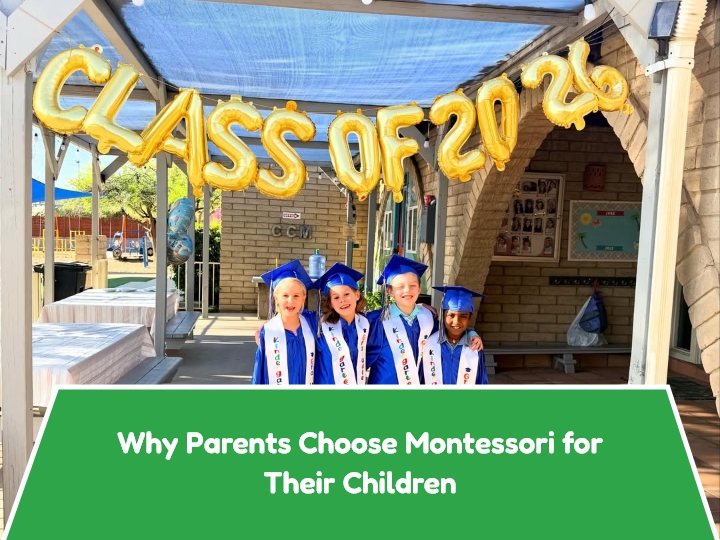
In Montessori education, the kindergarten year is traditionally the final year of the Primary classroom cycle.
During this year, children have opportunities to build upon the knowledge and skills developed during their earlier preschool experiences.
They may explore more advanced academic materials, take on additional classroom responsibilities, and serve as role models for younger classmates.
This progression provides opportunities to strengthen leadership, confidence, independence, and the ability to apply previously learned concepts.
Rather than viewing kindergarten simply as preparation for first grade, Montessori treats it as an important stage in a child’s continuing development.
The Value of Skills That Can’t Be Measured by a Test
Academic assessments can provide useful information about what children know, but they don’t capture every quality that contributes to success.
A child who patiently works through a difficult problem is demonstrating perseverance.
A child who comforts a classmate is showing empathy.
A child who independently organizes materials is practicing responsibility.
A child who asks thoughtful questions is demonstrating curiosity.
These accomplishments matter, even when they don’t appear on a report card.
Montessori education recognizes that developing these qualities is an important part of preparing children for the future.
Building a Strong Foundation at Cave Creek Montessori
For more than 25 years, Cave Creek Montessori has provided authentic Montessori education for children ages 18 months through kindergarten.
Serving families in Cave Creek, Carefree, North Phoenix, North Scottsdale, Desert Ridge,, and surrounding communities, our school emphasizes more than academic preparation.
Through individualized instruction, purposeful activities, and a nurturing classroom environment, children develop independence, concentration, responsibility, confidence, and the social skills that support their continued growth.
We believe the most valuable early education helps children become capable learners who are prepared to approach new experiences with curiosity, kindness, and confidence.
Discover the Lasting Benefits of Montessori Education
Choosing a preschool is about more than preparing your child to read, write, and count.
It’s about giving them opportunities to develop the skills and habits that will serve them throughout elementary school and beyond.
At Cave Creek Montessori, we help children build a strong foundation for academic success while nurturing the independence, confidence, and love of learning that make education a lifelong journey.
Schedule a tour at Cave Creek Montessori to see how authentic Montessori education prepares children for more than the next grade.
Frequently Asked Questions
What are the lifelong benefits of Montessori education?
Montessori education helps children develop skills that extend beyond academics, including independence, concentration, responsibility, problem-solving, perseverance, collaboration, and internal motivation. These abilities can support children as they progress through elementary school and encounter new challenges throughout life.
How does Montessori prepare children for elementary school?
Montessori prepares children by developing academic foundations alongside independence, concentration, communication, and responsibility. These skills can help children adjust to classroom routines, complete assignments, work with classmates, and approach unfamiliar learning experiences with confidence.
Does Montessori help children become more independent?
Yes. Montessori encourages children to complete age-appropriate tasks, make thoughtful choices, care for their belongings, and take responsibility for their work. These everyday experiences provide opportunities to develop self-reliance and confidence.
How does Montessori develop problem-solving skills?
Montessori uses hands-on learning materials that encourage children to explore, experiment, recognize mistakes, and discover solutions. Teachers provide guidance while allowing children appropriate opportunities to work through challenges independently.
Why is concentration important in Montessori education?
Concentration helps children stay engaged with learning, complete tasks, and develop deeper understanding. Montessori classrooms provide opportunities for sustained, purposeful work, helping children practice focusing their attention and following activities through to completion.
Does Montessori teach children responsibility?
Yes. Montessori children practice responsibility by caring for classroom materials, completing activities, following routines, respecting others, and contributing to their classroom community. These experiences help establish habits that can carry into elementary school and everyday life.
How does Montessori encourage children to become lifelong learners?
Montessori encourages curiosity, exploration, and the satisfaction of mastering new skills. By making learning meaningful and engaging, the approach helps children develop internal motivation and a positive attitude toward discovering new information.
Can Montessori skills benefit children who later attend traditional schools?
Yes. Skills such as independence, concentration, perseverance, problem-solving, communication, and responsibility are valuable in both Montessori and traditional classrooms. Although every child’s transition is different, these habits can help support adjustment to new academic and social expectations.