When parents think about preparing their children for future success, academics often come to mind first. While reading, writing, and math are important, research consistently shows that social-emotional skills play an equally critical role in a child’s ability to thrive in school, relationships, and life.
Social-emotional learning, often called SEL, involves developing the skills needed to understand emotions, build healthy relationships, make responsible decisions, and navigate challenges effectively. These abilities help children become confident, compassionate, and resilient individuals.
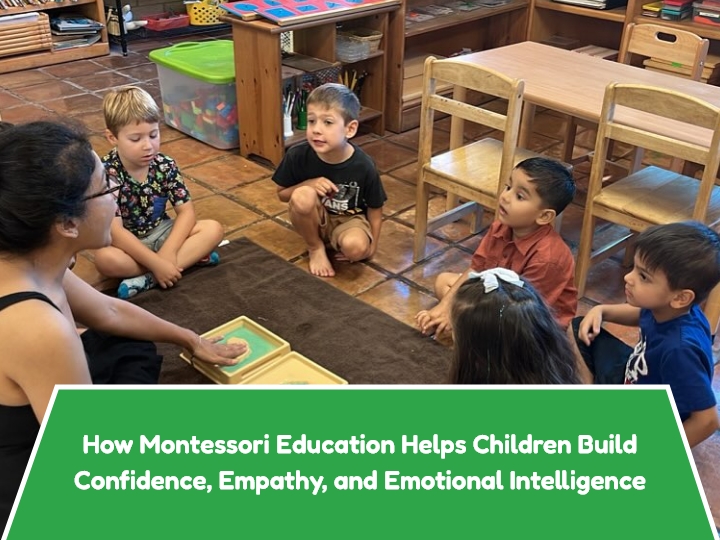
Montessori education naturally incorporates social-emotional learning into everyday experiences. Rather than teaching these skills through occasional lessons, Montessori classrooms create an environment where children practice emotional intelligence, empathy, communication, and self-regulation throughout the day.
At Cave Creek Montessori, we believe nurturing the whole child includes helping children develop the social and emotional skills that support lifelong success.
What Is Social-Emotional Learning?
Social-emotional learning is the process through which children develop the ability to:
- Understand and manage emotions
- Build positive relationships
- Show empathy toward others
- Make responsible decisions
- Communicate effectively
- Resolve conflicts peacefully
- Demonstrate self-control
- Develop self-confidence
These skills help children navigate everyday interactions while building a strong foundation for future academic and personal success.
Montessori Focuses on the Whole Child
One of the defining characteristics of Montessori education is its focus on educating the whole child.
Rather than measuring success solely through academic achievement, Montessori recognizes that emotional well-being and social development are essential components of learning.
Children learn best when they feel:
- Safe
- Respected
- Supported
- Valued
- Capable
Montessori classrooms are intentionally designed to create an environment where children feel empowered to grow academically, socially, and emotionally.
Building Self-Confidence Through Independence
Confidence is one of the most important outcomes of social-emotional development.
Montessori classrooms encourage children to complete tasks independently whenever possible. From caring for classroom materials to choosing activities and solving problems, children are given opportunities to demonstrate their abilities daily.
As children experience success, they begin to develop:
- Self-confidence
- Self-esteem
- Personal responsibility
- A positive self-image
Rather than relying on constant praise or external rewards, children develop confidence through meaningful accomplishments and real-world experiences.
Teaching Emotional Awareness
Young children experience a wide range of emotions but often need guidance understanding and expressing them appropriately.
Montessori teachers help children identify emotions and develop healthy ways to communicate their feelings.
Children learn to:
- Recognize emotions
- Name their feelings
- Understand emotional triggers
- Practice self-control
- Express themselves respectfully
This emotional awareness helps children develop stronger relationships and better coping skills.
Encouraging Empathy and Respect
Empathy is the ability to understand and care about the feelings of others.
Montessori classrooms naturally foster empathy through daily interactions and collaborative learning experiences.
Children are encouraged to:
- Listen to others
- Respect different perspectives
- Help classmates
- Show kindness
- Practice patience
Because Montessori classrooms often include mixed-age groups, younger children observe positive social behaviors while older children develop nurturing and leadership skills.
These experiences help children build compassion and understanding that extend beyond the classroom.
Learning Conflict Resolution Skills
Conflict is a natural part of childhood.
Rather than immediately solving disagreements for children, Montessori educators guide students through respectful conflict resolution processes.
Children learn how to:
- Communicate concerns calmly
- Listen to others
- Identify solutions
- Take responsibility for actions
- Work toward positive outcomes
These skills help children become effective communicators and problem-solvers while reducing frustration and misunderstandings.
Developing Self-Regulation
Self-regulation refers to a child’s ability to manage emotions, behaviors, and impulses.
This skill is critical for success in school and life.
Montessori classrooms support self-regulation by providing:
- Predictable routines
- Clear expectations
- Opportunities for independence
- Uninterrupted work periods
- Respectful guidance
Children gradually learn to manage their emotions, focus attention, and make thoughtful choices.
Strong self-regulation skills contribute to improved academic performance, better relationships, and increased resilience.
Creating a Sense of Belonging
Children thrive when they feel connected to their community.
Montessori classrooms are built on mutual respect and collaboration, helping children feel like valued members of the classroom community.
Students learn that their contributions matter and that they play an important role in maintaining a positive environment.
This sense of belonging supports emotional well-being while helping children develop confidence and social responsibility.
Leadership and Responsibility
Montessori classrooms provide many opportunities for children to take on leadership roles.
Older students often:
- Mentor younger classmates
- Demonstrate classroom routines
- Model positive behaviors
- Assist with problem-solving
These experiences help children develop responsibility, confidence, empathy, and communication skills.
Leadership opportunities also strengthen children’s belief in their ability to make a positive impact on others.
Social-Emotional Learning Supports Academic Success
Strong social-emotional skills support academic achievement in numerous ways.
Children who develop emotional intelligence are often better able to:
- Focus on learning
- Manage frustration
- Work cooperatively
- Solve problems
- Persist through challenges
When children feel confident and emotionally secure, they are more likely to engage fully in learning experiences.
This is one reason why Montessori education often produces strong outcomes both academically and socially.
Why Families Choose Cave Creek Montessori
At Cave Creek Montessori, we understand that success involves much more than academic achievement.
Our authentic Montessori environment helps children develop confidence, empathy, independence, responsibility, and emotional intelligence alongside strong academic skills.
Families throughout Cave Creek, Carefree, North Phoenix, North Scottsdale, Desert Ridge, Tatum Ranch, and the surrounding areas choose our school because they value an educational experience that supports the whole child.
By nurturing social-emotional development from an early age, we help children build the skills needed to thrive in school, relationships, and life.
Schedule a Tour of Cave Creek Montessori
The best way to experience Montessori social-emotional learning is to observe it in action.
We invite you to visit Cave Creek Montessori, tour our classrooms, meet our teachers, and discover how our programs help children develop confidence, empathy, and a lifelong love of learning.
Schedule a tour today and see how Cave Creek Montessori supports your child’s academic, social, and emotional growth.
Frequently Asked Questions
What is social-emotional learning?
Social-emotional learning is the process of developing skills such as self-awareness, emotional regulation, empathy, communication, and responsible decision-making.
How does Montessori support social-emotional development?
Montessori classrooms provide opportunities for children to practice independence, empathy, conflict resolution, communication, and self-regulation throughout the day.
Why is emotional intelligence important for children?
Emotional intelligence helps children understand their emotions, build healthy relationships, manage challenges, and succeed academically and socially.
How do Montessori classrooms encourage empathy?
Mixed-age classrooms, collaborative learning, and daily interactions help children understand others’ perspectives and develop compassion and respect.
Can social-emotional skills improve academic performance?
Yes. Children with strong social-emotional skills are often better able to focus, manage frustration, solve problems, and engage in learning activities.